High-Risk, High-Reward: Mastering Advanced Chess Gambits and Special Rules
Take your game to the next level by leveraging psychological tension and exploiting chess's trickiest rules. This guide explores high-impact tactics like the Queen’s Gambit, the Evans Gambit, and the often-misunderstood "en passant" capture.
7/16/20262 min read
Once you have memorized basic opening principles and king safety, the real psychological warfare begins. Advanced chess is about baiting your opponent, steering them into unfamiliar territory, and exploiting the game's most misunderstood rules.
If you are ready to move past slow positional grinds and introduce some chaos to the board, you need to master aggressive offerings and obscure mechanics. Here is how to weaponize advanced gambits and tactical quirks.
1. The Mysterious "En Passant": The Ghost Capture
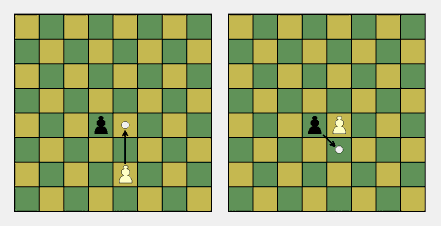
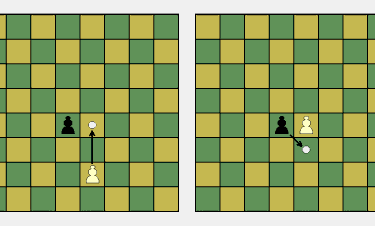
Nothing confuses intermediate players quite like en passant (French for "in passing"). This special pawn capture is the only move in chess where a capturing piece does not land on the exact square of the piece it takes.
This rule exists to prevent players from sneaking a pawn past an enemy pawn's attacking diagonal by leveraging the initial two-square jump. If you have a pawn sitting on your fifth rank (or fourth rank(horizontal row) for Black), and your opponent advances an adjacent pawn two squares forward, you can capture that pawn as if it had only moved one square.
How to Execute En Passant
1.The Setup
Your opponent must move their pawn two squares forward from its starting position, landing directly side-by-side with your advanced pawn.
2.The Strike
On your very next turn (you cannot wait), slide your pawn diagonally forward into the empty square behind the opponent's pawn and seize the opponent's pawn.
2. The Queen’s Gambit: Positional Domination
Popularized globally by modern media, the Queen’s Gambit queen's pawn to d4, opponent's queen's pawn to d5, dxc4) is not actually a true sacrifice. It is a highly sophisticated fight for central space.
By offering the c-pawn, White temporarily baits Black into giving up their central d5-pawn. If Black accepts they surrender the center. White can easily regain the sacrificed pawn later while utilizing a massive space advantage. If Black declines—which is often wiser and by far more common—White maintains aggressive central pressure, restricting Black's minor pieces to cramped, defensive squares.
3. The Marshall Attack: Ultimate Counter-Aggression
If you play Black and are tired of defending passive lines, the Marshall Attack is your ultimate weapon. Emerging from the classic Ruy Lopez opening, Black courageously sacrifices a central pawn to launch a relentless, tactical assault on the white king.
By giving up the e5-pawn, Black gains rapid development and clears dangerous diagonals for their bishops. While White scrambles to defend their king with extra material but awkward coordination, Black unleashes a barrage of direct threats. It is a highly theoretical battle where one slip-up from White leads to a quick checkmate.
For a more concise explanation, watch this video: https://www.youtube.com/watch?v=CN6mrRezpIk&t=3s
4. The Evans Gambit: Chaos on the Queenside
For lovers of wild, more adventurous chess moves, the Evans Gambit is pure adrenaline.
White voluntarily gives up a flank pawn on b4 simply to lure Black's bishop out of position. In return, White gains two massive advantages: they open up rapid development lines for their queen and dark-squared bishop, and they establish an immediate, crushing pawn center with c3 and d4. It forces Black to play highly precise defense from move four, stripping away their comfort zone. This gambit is rather advanced but with mastery of it and its variations, you will be a formidable chess aficionado.
To achieve such mastery, check out this video: https://www.youtube.com/watch?v=-BtExQvYc5g
Play with Bold Intent
Stepping into advanced chess means embracing calculated risks. Whether you are using en passant to shatter an opponent's pawn chain or sacrificing material in a razor-sharp gambit, success lies in your confidence. Don't just play the pieces—play the psychological tension across the board.